


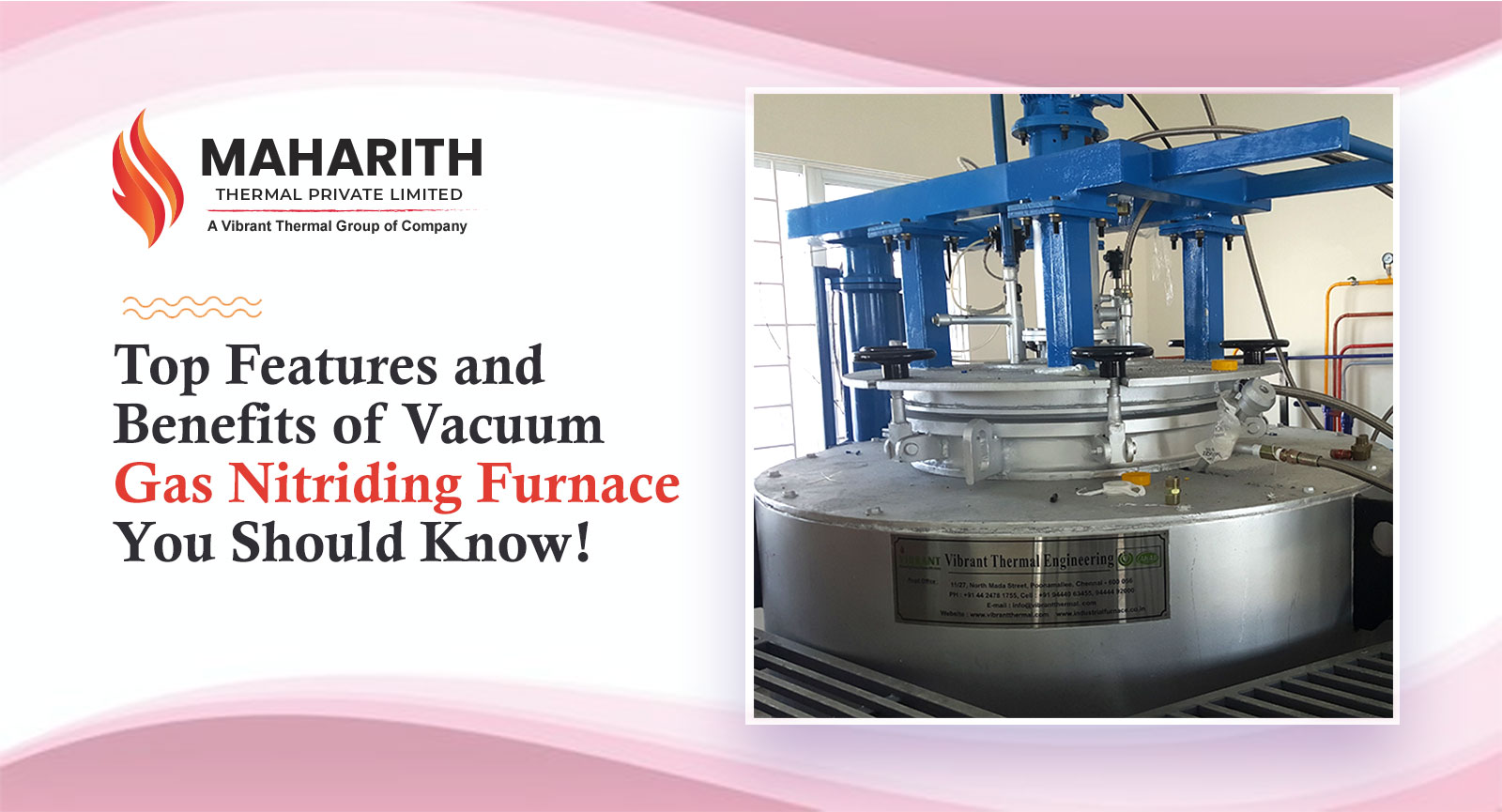
Vacuum gas nitriding greatly improves the fatigue strength and service life of ferrous-based components. A Vacuum Gas Nitriding Furnace works quite simply. This furnace uses the nitriding process to harden the surface of metal items. So, what are the benefits and features of this industrial furnace? Read this blog post for a deeper look.
The Working of the Vacuum Gas Nitriding Furnace
Vacuum nitriding furnaces function by introducing ammonia gas into a vacuum furnace, similar to pulse vacuum carburizing, where the workpiece begins to suction once loaded. When the vacuum degree reaches a certain level, the furnace is heated with electricity while a vacuum is pushed at the same time to keep the vacuum level constant.
When the furnace temperature approaches the nitriding temperature, heat preservation occurs for a length of time. Its purpose is to clean the workpiece’s surface and burn through.
The vacuum is then halted, and the nitriding gas is injected into the furnace, causing the furnace pressure to increase to a certain value for a length of time. The vacuum is pumped for some time before the nitriding gas is injected into the furnace. Thus, the nitriding layer is repeated several times until it achieves the required depth. Throughout the process, the furnace temperature stays constant.
Benefits of Vacuum Gas Nitriding Furnace
Advantages of a vacuum nitriding furnace include low temperatures. The method is suited for a variety of steels and is frequently employed. The strengthening effect is impressive, and the wear, corrosion, and fatigue resistance are significantly enhanced following treatment. Higher efficiency, energy savings, and environmental protection, with a shorter process cycle than ordinary gas nitriding.
Features of Vacuum Gas Nitriding Furnace
Easy Operation: The vacuum pulse nitriding technique adjusts the nitrogen potential in the furnace in a pulsed way. The procedure is simpler to implement than the traditional positive pressure nitriding furnace because it eliminates the requirement to detect the change in nitrogen potential within the furnace environment.
Low production costs: The vacuum pulse nitriding process is 50% faster than the standard nitriding process, and the unit installed capacity is higher, allowing for substantial cost savings.
Unique Design: The gas nitriding furnace has a durable design. It has a horizontal, front-loading design. Also, it features a hinged front door for easy loading and unloading of workloads. The hot zone is insulated with graphite. Heating components use flat graphite resistance and convection blowers to provide fast and even heating.
Different steel grades are used for vacuum ion nitriding, including
- alloy structural steel
- stainless steel
- heat-resistant steel
- alloy tool steel
- nodular cast iron
High surface hardness: Following the workpiece by pulsed nitriding, the surface hardness is largely governed by the composition of the nitride layer and the overall depth of the nitride and anti-scattering layer, but also by the near-surface concentration of nitrogen atoms on the surface. Related, vacuum pulse nitriding may effectively enhance the concentration of nitrogen atoms on the surface of the workpiece, as well as the surface hardness of the workpiece.
Conclusion
Vacuum gas nitriding furnaces have high production efficiency and low cost. If you are searching for a good quality gas nitriding furnace, contact Maharith Thermal Pvt. Ltd. Our industrial furnaces are useful in various applications.

Maharith Thermal Private Limited
Maharith Thermal Pvt Ltd is known for its expertise in Industrial heater and Industrial Oven manufacturing. We fabricate high-grade and energy-efficient furnaces to meet research and industrial requirements.