


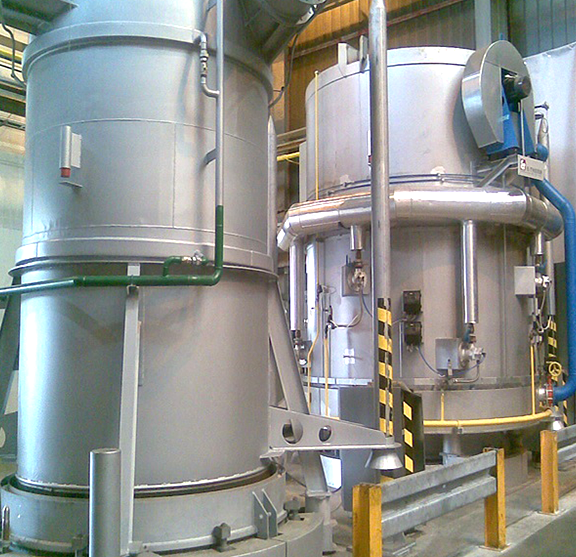
Maharith Thermal Pvt.Ltd reckoned as the top Bell Furnace Manufacturer and Supplier in the industry furnace market. We have a proficient and experienced furnace manufactures team, who are always ready to design the ultimate heat furnace within your budget.
Technical Specifications
Double-walled steel with insulation
Vertical loading and unloading
1,100°C to 1,350°C
±5°C (depending on the zone and process requirements)
Electric resistance heaters, gas burners, or infrared heaters
Kanthal, silicon carbide, or molybdenum disilicide
Nitrogen, argon, hydrogen, or forming gas
Type K or S thermocouples, infrared pyrometers
Over-temperature protection, gas leak detectors, emergency shut-off valves
Leading Bell Furnace Suppliers & Exporters In India
Moreover, we make furnaces such that these furnaces work best in challenging circumstances without compromising on quality or performance aspects. To meet the requirements of the customers, we are at the top in the list of best Furnace manufacturers in India.
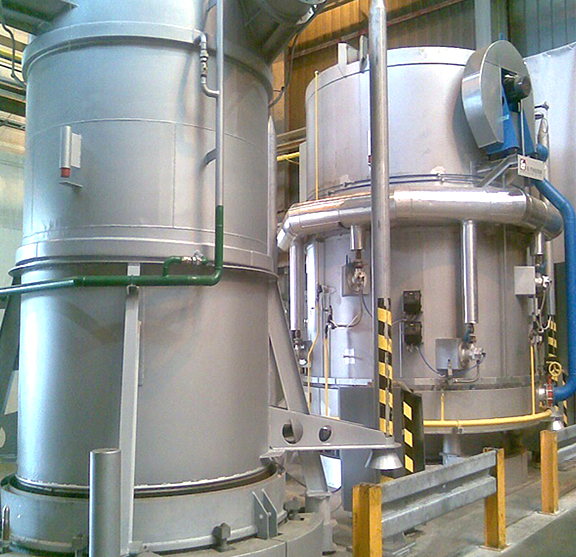
Bell Furnace is a heat-treatment furnace in which products are heated under a variable arena. Just like the Bogie Hearth Furnace, Bell Furnace use is to carry out heat treatment, though these further usages in sintering processes at low temperatures, or for drying. Additionally, Bell Furnace also used for various industrial applications like in chemical plants as well as delivering heat to chemical reactions. Moreover, in the colder areas people use to warm up their homes with the usage of Furnace.
Find Out Features of Bell Furnace
Salient Features
- Strong designed for the continued operation
- Heating by oil, gas or electrical
- Continues heating
- Bell Furnace is grooved to give a long running life.
Applications of Bell Furnace
Highest Quality Bell Furnace Now At Reasonable Rates
In the technical era, Bell Furnace now become the necessity of the industry if any of your method or application needs an enclosed atmosphere bell furnace is used. To have the ultimate quality of this Industrial Furnace, we are considered as the best Bell Furnace Exporter in the market. We deliver the superlative furnace within your budget. Don’t waste your time, call us today and buy the best quality furnace and get profit in your business.
Frequently Asked Questions (FAQs)
Why is a bell furnace specifically preferred for annealing steel wire and strip coils?
A bell furnace is widely preferred for annealing steel wire and strip coils because it provides excellent temperature uniformity, controlled atmosphere processing, and efficient heat transfer throughout the entire coil. These features ensure consistent metallurgical properties while minimizing oxidation and surface defects.
Key advantages of a bell furnace for annealing steel wire and strip coils include:
- Excellent temperature uniformity throughout the coil, resulting in consistent mechanical properties.
- Controlled protective atmosphere to prevent oxidation, scaling, and decarburization while producing a bright surface finish.
- Uniform heating and controlled cooling, reducing thermal stresses and distortion.
- Suitable for tightly wound wire and strip coils, ensuring effective heat penetration to the inner layers.
- Improved ductility, formability, and softness required for subsequent drawing, stamping, rolling, or forming operations.
- High energy efficiency through the use of reusable heating and cooling hoods.
- Capability to process multiple coils in a single batch, increasing productivity and reducing operating costs.
Bell furnaces are extensively used in the steel industry for annealing:
- Steel wire coils
- Cold-rolled steel strip coils
- Stainless steel coils
- Copper and aluminium coils (depending on the process requirements)
At Maharith Thermal Pvt. Ltd., we design and manufacture custom bell furnaces with advanced temperature control, excellent temperature uniformity, and controlled atmosphere systems to deliver superior annealing quality, consistent metallurgical properties, and high productivity for coil heat treatment applications
What controlled atmospheres can a bell furnace operate with?
A bell furnace can operate with a variety of controlled or protective atmospheres, depending on the material being processed and the required heat treatment process. The choice of atmosphere is critical for preventing oxidation, minimizing decarburization, and achieving the desired metallurgical properties and surface finish.
Common protective atmospheres used in bell furnaces include:
- Nitrogen (N₂): Used for general protective annealing and oxidation prevention.
- Hydrogen (H₂): Produces a bright, oxide-free surface and is widely used for annealing steel, stainless steel, copper, and electrical steels.
- Nitrogen–Hydrogen (N₂–H₂) Mixtures: The most commonly used atmosphere for bright annealing, providing excellent surface finish and process economy.
- Argon (Ar): Used for specialized applications requiring an inert atmosphere.
- Other custom protective gas mixtures: Selected based on the material grade and specific process requirements.
The atmosphere is selected based on factors such as:
- Material type and grade.
- Required surface finish.
- Annealing temperature.
- Product quality requirements.
- Applicable industry standards.
At Maharith Thermal Pvt. Ltd., our bell furnaces are designed with advanced atmosphere control systems, gas-tight construction, precise temperature control, and reliable safety features to ensure consistent heat treatment results and superior product quality across a wide range of industrial applications.
What is the difference between the outer bell and the inner cover in a bell furnace?
A bell furnace consists of two key components: the outer bell (heating hood) and the inner cover (protective atmosphere retort). Each performs a distinct function in the heat treatment process.
Outer Bell (Heating Hood)
The outer bell houses the heating system and insulation. Its primary purpose is to supply heat uniformly around the workload.
Functions:
- Contains the heating elements or burners.
- Provides thermal insulation to minimize heat loss.
- Ensures uniform heat distribution around the inner cover.
- Can be moved from one furnace base to another, allowing multiple bases to share a single heating hood and improve productivity.
Inner Cover (Protective Atmosphere Cover)
The inner cover is a gas-tight enclosure placed over the workload on the furnace base. It isolates the material from the surrounding air and maintains the required protective atmosphere throughout the heat treatment cycle.
Functions:
- Creates a sealed chamber for the protective atmosphere.
- Prevents oxidation, scaling, and decarburization.
- Maintains the required atmosphere composition and pressure.
- Protects the workload during both heating and cooling cycles.
- Produces a clean, bright surface finish after annealing.
Outer Bell (Heating Hood) | Inner Cover |
Contains the heating system | Contains the protective atmosphere |
Provides heat and insulation | Provides a gas-tight enclosure for the workload |
Ensures uniform heating | Prevents oxidation and decarburization |
Can be transferred between furnace bases | Remains on the furnace base during processing |
At Maharith Thermal Pvt. Ltd., our bell furnaces are designed with robust heating hoods, high-integrity gas-tight inner covers, and advanced atmosphere control systems to ensure excellent temperature uniformity, reliable atmosphere protection, and consistent heat treatment quality
What causes atmosphere contamination inside a bell furnace and how is it detected?
Atmosphere contamination in a bell furnace occurs when unwanted gases or impurities enter the protective atmosphere, affecting the heat treatment process and the quality of the finished product. Contamination can result in oxidation, discoloration, decarburization, or inconsistent metallurgical properties.
Common causes of atmosphere contamination include:
- Leakage through damaged inner cover seals or furnace base seals.
- Cracks or damage to the inner cover allowing air ingress.
- Improper purging before introducing the protective atmosphere.
- Insufficient purity or incorrect composition of the process gas.
- Moisture, oil, or other contaminants entering through the gas supply.
- Leaks in gas pipelines, valves, or fittings.
- Improper loading introducing moisture or contaminants into the furnace.
Atmosphere contamination can be detected by:
- Monitoring oxygen levels using an oxygen analyzer.
- Monitoring the dew point of the protective atmosphere.
- Verifying gas pressure and flow rates.
- Conducting periodic leak tests on the inner cover and gas piping.
- Inspecting the surface finish of heat-treated components for oxidation or discoloration.
- Monitoring atmosphere parameters through the furnace PLC or control system.
Routine inspection of seals, gas supply systems, and atmosphere monitoring instruments helps maintain a stable protective atmosphere and ensures consistent heat treatment quality.
At Maharith Thermal Pvt. Ltd., our bell furnaces are equipped with gas-tight inner covers, reliable sealing systems, advanced atmosphere controls, and optional oxygen and dew point monitoring to ensure consistent atmosphere quality and superior annealing performance.
Is a gas-fired or electrically heated bell furnace better for wire annealing?
Both gas-fired and electrically heated bell furnaces can produce excellent annealing results when properly designed. The best choice depends on factors such as energy availability, operating costs, production capacity, temperature uniformity requirements, and customer preferences.
An electrically heated bell furnace offers:
- Precise temperature control and excellent temperature uniformity.
- Clean heating with no combustion products.
- Lower maintenance due to the absence of burners and fuel systems.
- Easier process automation and repeatable heat treatment cycles.
- Ideal for applications requiring high process accuracy and consistent product quality.
A gas-fired bell furnace offers:
- Lower operating costs where natural gas is readily available and economical.
- Faster heat-up rates for large workloads in some applications.
- Suitable for high-capacity production and continuous industrial operation.
- Requires combustion systems, burners, and periodic burner maintenance.
For wire annealing, the most critical factors are temperature uniformity, protective atmosphere control, and controlled cooling, rather than the heating source itself. Both gas-fired and electrically heated bell furnaces can achieve high-quality annealing when these parameters are properly controlled.
At Maharith Thermal Pvt. Ltd., we design and manufacture both electrically heated and gas-fired bell furnaces, helping customers select the most suitable solution based on their production requirements, utility availability, operating costs, and heat treatment process
How long does a typical bell furnace annealing cycle take from loading to unloading?
The total annealing cycle in a bell furnace depends on several factors, including the material grade, coil size, workload, annealing temperature, protective atmosphere, heating rate, soaking time, and cooling requirements.
A typical bell furnace cycle includes:
- Loading: Placing the coils on the furnace base and positioning the inner cover and heating hood.
- Purging: Removing air from the inner cover and establishing the required protective atmosphere.
- Heating: Raising the workload to the specified annealing temperature.
- Soaking: Holding the material at the required temperature to achieve uniform metallurgical properties.
- Cooling: Controlled cooling under the protective atmosphere, often using a cooling hood, to achieve the desired mechanical properties.
- Unloading: Removing the coils after they have reached the specified unloading temperature.
Depending on the application, the complete cycle typically ranges from 16 to 72 hours, although larger coils, higher workloads, or special heat treatment requirements may require longer cycle times.
At Maharith Thermal Pvt. Ltd., our bell furnaces are engineered with optimized heating and cooling systems, excellent temperature uniformity, and advanced process controls to minimize cycle time while ensuring consistent annealing quality, energy efficiency, and high productivity.
How much does a commercial bell furnace cost?
The cost of a commercial bell furnace depends on several factors, including the furnace capacity, maximum operating temperature, coil size, heating method, protective atmosphere requirements, automation level, and production capacity.
The main factors affecting the cost include:
- Coil dimensions and maximum workload capacity.
- Maximum operating temperature.
- Heating method (electric or gas-fired).
- Number of furnace bases, heating hoods, and cooling hoods.
- Protective atmosphere system (Nitrogen, Hydrogen, or Nitrogen–Hydrogen mixture).
- Temperature uniformity and process control requirements.
- PLC, HMI, SCADA, data logging, and recipe management.
- Loading and material handling systems.
- Compliance with customer specifications and applicable industry standards.
At Maharith Thermal Pvt. Ltd., every bell furnace is custom-engineered to suit the customer’s process requirements. We manufacture bell furnaces for annealing steel wire coils, strip coils, stainless steel coils, copper, aluminium, and other ferrous and non-ferrous materials, with capacities ranging from small production units to heavy-duty industrial installations.
Since each application is unique, pricing is based on your technical specifications. Share your material type, coil dimensions, workload, operating temperature, atmosphere requirements, production capacity, and automation needs, and our engineering team will provide a detailed techno-commercial proposal tailored to your application.
What are the space and setup needs for a bell furnace?
The space and installation requirements for a bell furnace depend on its capacity, number of furnace bases, heating and cooling hoods, material handling method, and production requirements. Proper planning ensures safe operation, efficient workflow, and reliable heat treatment performance.
Typical installation requirements include:
- A reinforced foundation designed to support the furnace base, heating hood, cooling hood, and maximum workload.
- Adequate floor space for furnace bases, heating hoods, cooling hoods, and future expansion if required.
- Sufficient clearance for cranes or other material handling equipment used for loading coils and transferring hoods.
- Reliable electrical power supply or gas supply, depending on the heating method.
- Utility connections for protective atmosphere gases such as nitrogen, hydrogen, or nitrogen–hydrogen mixtures, where applicable.
- Cooling water supply for cooling systems, if required.
- Compressed air supply for pneumatic valves, actuators, and control systems.
- Adequate ventilation and compliance with applicable industrial safety regulations.
- Provision for PLC, HMI, SCADA, and instrumentation panels, if specified.
The layout should also allow safe movement of personnel and equipment, easy maintenance access, and efficient loading and unloading of coils or workpieces.
At Maharith Thermal Pvt. Ltd., we provide complete installation support, including foundation drawings, utility layouts, GA drawings, electrical load details, and commissioning assistance. Our engineering team ensures that every bell furnace installation is optimized for safety, productivity, and long-term operational reliability.
Why is my bell furnace heating unevenly, and how do I fix it?
Uneven heating in a bell furnace can result in inconsistent mechanical properties, variations in hardness, and non-uniform annealing across the workload. The problem is usually caused by issues related to the heating system, protective atmosphere circulation, loading arrangement, or furnace maintenance.
Common causes include:
- Improper loading or incorrect stacking of coils, restricting heat transfer.
- Malfunctioning or underperforming circulation fan (where applicable).
- Faulty or deteriorated heating elements or burners.
- Incorrect placement or calibration of thermocouples.
- Uneven protective atmosphere circulation within the inner cover.
- Damaged insulation or excessive heat loss from the heating hood.
- Air leakage through worn inner cover seals or base seals.
- Incorrect process settings, heating rate, or soaking time.
- Lack of preventive maintenance.
To resolve uneven heating:
- Ensure the workload is loaded as per the recommended loading arrangement.
- Inspect and maintain heating elements, burners, circulation fans, and insulation.
- Calibrate thermocouples and temperature controllers periodically.
- Check the integrity of the inner cover and sealing system to prevent atmosphere leakage.
- Verify proper atmosphere circulation and gas flow.
- Conduct periodic Temperature Uniformity Surveys (TUS) where required to confirm furnace performance.
At Maharith Thermal Pvt. Ltd., our bell furnaces are designed with optimized heating systems, efficient atmosphere circulation, robust sealing arrangements, and precise temperature control to achieve excellent temperature uniformity and consistent annealing results throughout the entire workload.
What is the typical operational lifespan of a bell furnace?
The typical operational lifespan of an industrial bell furnace is 10 to 12 years or more, depending on its design, operating conditions, maintenance practices, and production environment. With proper preventive maintenance and timely replacement of wear components, many bell furnaces continue to operate reliably well beyond their expected service life.
The service life of a bell furnace is influenced by:
- Quality of furnace construction and insulation materials.
- Operating temperature and production cycles.
- Type of protective atmosphere used.
- Regular preventive maintenance and servicing.
- Periodic calibration of temperature and atmosphere control instruments.
- Timely replacement of heating elements or burners, circulation fans, thermocouples, inner cover seals, and other wear components.
- Proper operating practices and adherence to the recommended workload capacity.
Routine inspection of the heating hood, cooling hood, inner cover, sealing system, and atmosphere control equipment helps maintain consistent performance, energy efficiency, and product quality throughout the furnace’s service life.
At Maharith Thermal Pvt. Ltd., our bell furnaces are engineered with robust construction, high-quality insulation, durable inner covers, advanced atmosphere control systems, and reliable automation to deliver long service life, consistent heat treatment performance, and low maintenance requirements
Any Enquiry
If you’ve got questions or ideas you would like to share, send a message. For anything more specific, please use one of the addresses listed below.
Old No. 2/73, New No. 3/849, Bye Pass Road, Devi Kalyana Madnadapam Complex, Sennerkuppam, Poonamallee Chennai, Tamil Nadu, India – 600056
+91-9444063455