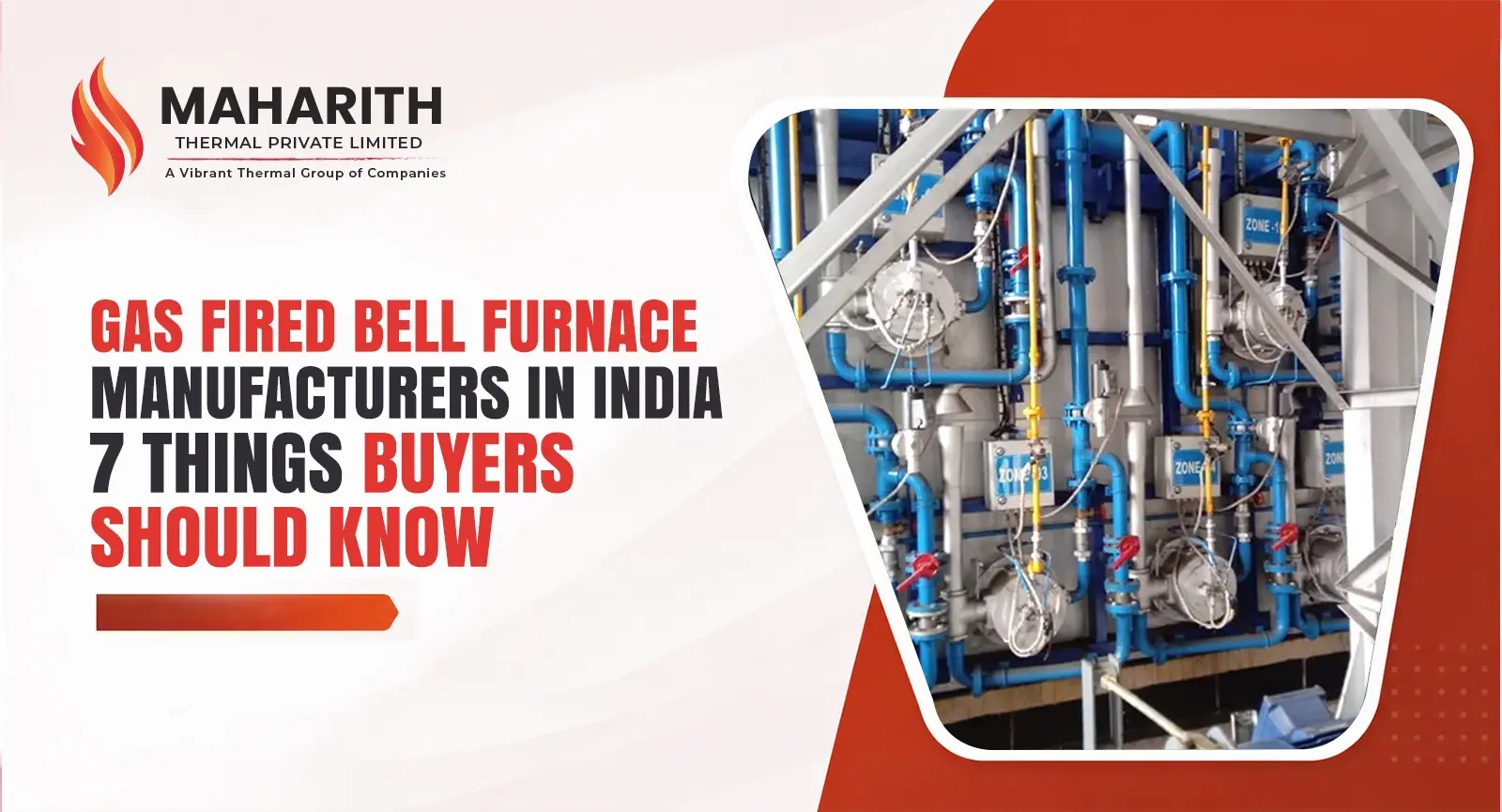
Overview
Choosing among Gas Fired Bell Furnace manufacturers in India takes more than comparing prices. This blog covers seven things buyers should know: process and capacity fit, burner system, temperature control, insulation and build, safety, installation and service, and total cost. By the end, you will have a simple checklist to compare makers and place your order with confidence.
This Blog Includes
- Factor 1: Process and Capacity Fit
- Factor 2: Burner System and Fuel Type
- Factor 3: Temperature Uniformity and Controls
- Factor 4: Insulation and Build Quality
- Factor 5: Safety Features
- Factor 6: Installation and Commissioning
- Factor 7: Service, Spares and Total Cost
- Questions to Ask Before You Order
- Choose With Care and Take the Next Step
- Frequently Asked Questions
Introduction
A Gas Fired Bell Furnace is a batch heat treatment furnace. The charge, such as steel coils, wire or strip, sits on a fixed base under a protective cover, and a heating hood is lowered over it for annealing and similar processes. Many plants use it when they need steady, repeatable results in a controlled atmosphere. Buying one is a long-term decision. The furnace runs for many years, uses a lot of fuel and directly affects product quality. Not every maker offers the same design, safety or support. The seven things below will help you ask better questions before you order.Process and Capacity Fit
Start with your own process, because the right Gas Fired Bell Furnace depends on it. What material will you heat, at what temperature, and how much per batch? Annealing steel coils, wire and strip need different set-ups from copper or aluminium products. Tell the maker your charge weight, coil size, soaking temperature and cycle time. A good manufacturer will suggest the number of stacks and the base size that suit your output, instead of pushing a standard model. Plan for growth too. A furnace that is slightly bigger than today’s need is cheaper than buying a second one in two years. Check that the layout leaves space for extra bases later.Burner System and Fuel Type
Burners decide fuel use and heating quality. Ask which burner make is used, how many are fitted and how the flame is spread around the hood. Even flame distribution helps avoid hot and cold spots. Confirm the fuel type early. Natural gas, LPG and propane need different burner and pipeline settings. Check what is available at your site and the gas pressure you can supply. Ask about fuel use per batch. A maker who can share typical figures from running plants is easier to trust than one who only quotes brochure numbers. Also check if waste heat can be recovered, since that can lower running costs.Temperature Uniformity and Controls
Good annealing needs even heat across the whole charge. Ask how the furnace achieves uniformity, whether through a base fan, flow design or zone control. Ask for temperature survey data from a similar installation. Look at the control system. A PLC-based panel with proper thermocouples, data logging and programmable cycles gives repeatable results and cuts operator guesswork. Check how the atmosphere is managed too. Many bell furnaces run with nitrogen or hydrogen mixes to protect the surface. Ask how gas flow, purging and dew point are monitored. Clear charts and records also help when your customer asks for quality proof.Insulation and Build Quality
Insulation affects fuel cost and outer surface temperature. Ask what material is used in the hood and how thick it is. Ceramic fibre lining is common because it heats up and cools down quickly and holds heat well. Look at the inner cover and base as well. They face repeated heating and cooling, so material grade and welding quality matter. A weak inner cover can leak and spoil the atmosphere. Check the steel frame, the lifting arrangement and the sealing between the cover and base. Neat fabrication and clear drawings usually point to a careful maker. Ask what the lining life is and how it is repaired, because relining is a regular cost.Safety Features
Gas and high temperature call for strict safety. Check for flame failure devices, gas pressure switches, over-temperature protection and emergency shut-off valves on every Gas Fired Bell Furnace. Ask about the purge cycle before firing. Furnaces that run with protective gases also need leak detection and proper venting, so no gas collects around the unit. Find out which standards the design follows, and ask for the safety documents in writing. Operators should also get clear instructions and training on start-up, shutdown and alarms. A plant that skips safety to save cost can end up paying far more later.Installation and Commissioning
A good furnace can still disappoint if it is installed poorly. Ask who will supervise the foundation, assembly, piping and electrical work, and how long commissioning takes. If you are buying from overseas, choose among Gas Fired Bell Furnace Exporters who can supply clear drawings, shipping details and remote or on-site help. Check that the maker runs a trial heat cycle with your material before handover. Ask for the operation manual, burner tuning records and training for your team. Get a written commissioning plan with dates, so both sides know what is expected. Delays at this stage cost production time.Service, Spares and Total Cost
Ask about spares such as burners, thermocouples, fans, seals and lining material. If the maker keeps stock and replies quickly, your downtime stays short. Also ask for a list of recommended spares for the first two years. Look at the warranty terms and the service team. A working phone number and engineers who can reach your site are worth more than a small discount. Compare quotations on total cost. Add fuel use, lining repair, spares and power for fans and controls to the purchase price. The cheapest offer often costs more over ten years. Speak to a few existing customers if you can. Their honest answers tell you more than any brochure.Questions to Ask Before You Order
Keep this short list handy when you speak to manufacturers:- Can you suggest the right size for my charge and cycle time?
- Which burners and controls do you use?
- Can I see temperature survey data from a similar furnace?
- What safety devices are included as standard?
- Who handles installation and commissioning?
- How quickly can you supply spare parts?
Choose With Care and Take the Next Step
Choosing a maker takes time, but it is worth doing carefully. Check process fit, burners, controls, safety, support and total cost, and do not rush the decision. If you are planning to buy, you can look at the range offered by Maharith Thermal Pvt. Ltd. Go through the details, note down your charge size, temperature and fuel needs, and contact the team to discuss what suits your work. A short conversation now can save you a lot of trouble later when choosing your next Gas Fired Bell Furnace.Frequently Asked Questions
How long does it take to make and deliver the furnace?
Lead time depends on the size, the number of bases and any special controls. Standard designs move faster, while custom builds need more time for fabrication and testing. A good manufacturer gives a written schedule with the quotation and updates you if dates change.
Can the furnace be designed for my fuel and process?
Yes, in most cases. Manufacturers can set the burners, pipeline and controls for natural gas, LPG or propane, and size the furnace to your charge weight and cycle. Share your product details and gas supply data before you order.
What does the warranty cover?
Warranty normally covers manufacturing defects and faulty parts for a fixed period, often a year. Lining wear, consumables and damage from wrong use are usually left out. Ask for the terms in writing.
Do you provide installation, commissioning and training?
Most manufacturers send engineers to supervise installation, tune the burners, run a trial cycle and train your operators. Ask whether this is included in the price or charged separately.