


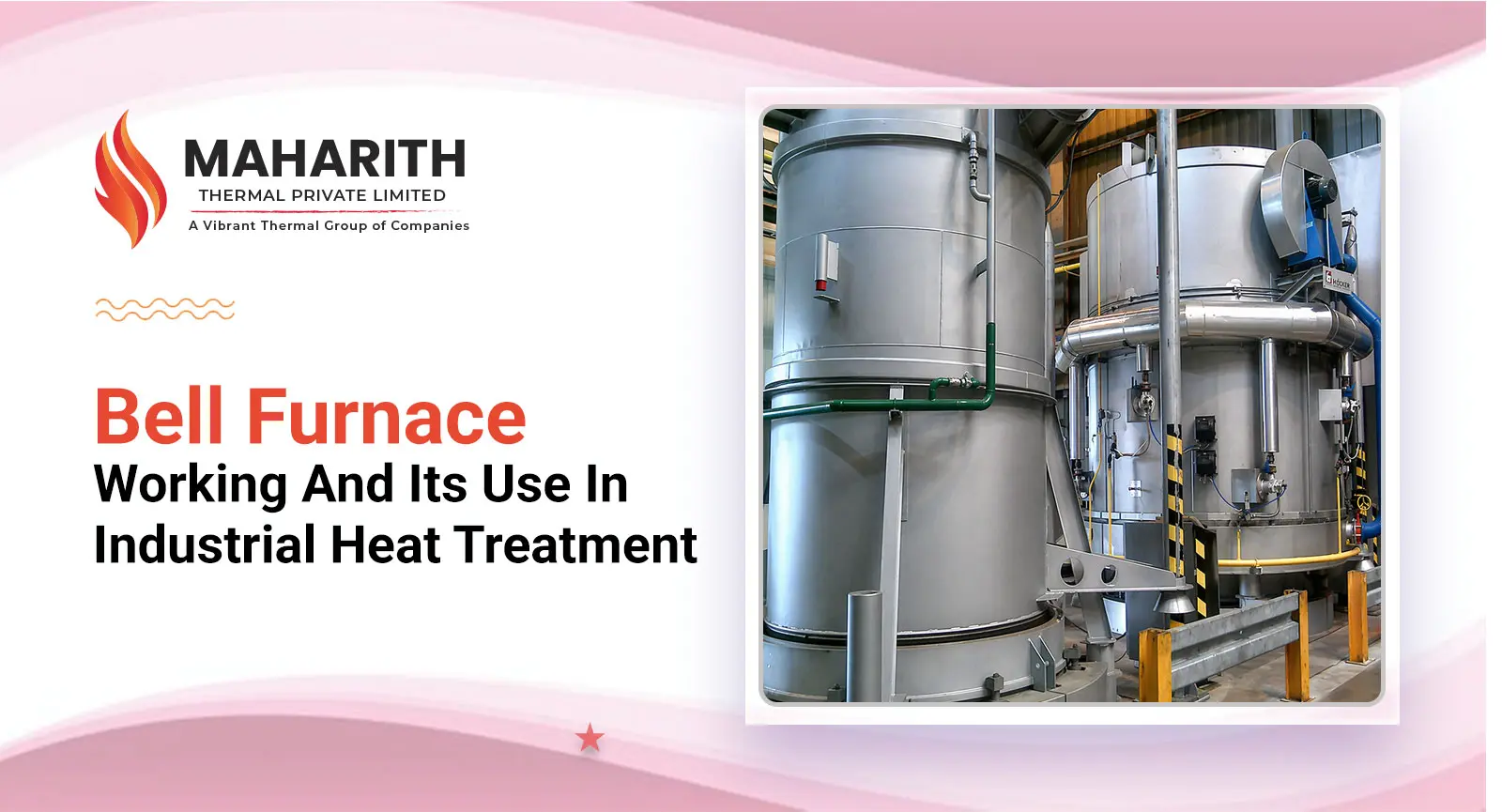
In industrial work, heating is never just about turning equipment on and off. It’s about how consistently the result comes out after every batch. When people look at different heating systems in industry, it may seem like a simple comparison, but on the shop floor, things work very differently when it comes to Bell Furnace working and its use in industrial heat treatment. One batch may come out perfect, while the next shows uneven hardness, surface marks, or quality variation. This is where production issues start building up quietly. In many steel and heat treatment units, a Bell Furnace is used to control this problem because it focuses on steady, uniform heating instead of quick output. Understanding Bell Furnace Working becomes important when rejection and rework start increasing in daily production. That is why many industries shift towards better-controlled systems instead of adjusting the same process again and again. In this article, we will look at where each system fits and what actually works in real production.
Where a bell furnace is actually used in plants
A bell furnace is not used for general heating work. It is used when the job needs control.
- Used in heat treatment, like annealing
- Works for batch processing of metal parts
- Helps maintain even heating across the full load
- Used when quality consistency matters more than speed
These are the basic Bell Furnace Benefits seen in day-to-day production.
Bell furnace working (simple shop-floor explanation)
The work is actually very straightforward.
- Metal parts are kept on a fixed base
- A bell-shaped cover is lowered on top
- Heating happens inside this closed space
- Temperature stays controlled during the full cycle
This Bell Furnace Working method helps avoid uneven heating, which is common in open or poorly controlled systems.
Problems it helps reduce in real production
Most industries move to bell furnaces only after facing repeated issues.
- One batch hard, another batch soft
- Surface marks after heat treatment
- High rejection during inspection
- Extra rework after processing
These problems usually come from unstable heating control. That’s why working with proper Bell Furnace Manufacturers becomes important. Design and control both affect output more than people expect.
Industrial Oven vs Commercial Oven: What Actually Affects Production Cost and Quality
| Factor | Industrial Oven | Commercial Oven | Bell Furnace Fit | Real Pain Point (What Goes Wrong) | Cost Impact |
Main Use | Heavy industrial heating for metals | Food, baking, and light heating tasks | Used for controlled heat treatment, like annealing | Wrong equipment selection leads to process failure | High rejection + material waste |
Temperature Control | Good, but depends on the system design | Basic control, not suitable for metals | Very stable and batch-controlled heating | Uneven heating causes inconsistent output | Rework cost increases daily |
Load Type | Large metal batches | Small food-based loads | Heavy metal parts in the batch process | Overloading the wrong system damages output quality | Equipment wear + production delay |
Consistency | Moderate to high (depends on setup) | Low for industrial use | Very high consistency in repeated cycles | Batch variation leads to rejection in QC | Scrap material loss |
Output Quality | Can be stable if maintained well | Not applicable for industrial parts | Uniform hardness and surface stability | Quality fluctuation reduces customer trust | Loss of repeat orders |
Downtime Risk | Medium (depends on maintenance) | Low but irrelevant for the industry | Low when properly maintained | Frequent breakdowns disrupt production flow | Lost production hours |
Best Application | Manufacturing, automotive, fabrication | Hotels, bakery, food industry | Steel plants, heat treatment units | The wrong machine for the job leads to an inefficient process | Hidden operational cost |
Why it matters in daily factory work
On paper, heating looks simple. In reality, small errors become big losses.
- Rejection means direct material waste
- Rework slows down production flow
- Delays affect dispatch schedules
- Inconsistent quality affects customer trust
That’s where understanding real Bell Furnace Benefits becomes practical, not theoretical.
When a bell furnace is Important
It is not needed in every setup. But it becomes important when:
- Output quality keeps changing
- Rejection is increasing slowly
- Heat treatment needs tighter control
- Production is not stable from batch to batch
At that point, choosing the right Bell Furnace Manufacturers is not about upgrading; it’s about fixing a problem.
Conclusion
Industrial ovens and commercial ovens are used for different kinds of work, and in real production, the difference shows in results. The main issue is not just heating, it’s getting the same output again and again without variation. A Bell Furnace is preferred in heat treatment because it keeps heating steady and helps reduce uneven batches. This means less rejection and fewer do-overs on the shop floor. In simple words, it just makes daily work more stable. For proper guidance and reliable setup, Maharith Thermal Pvt Ltd is there to support your industrial needs.

Maharith Thermal Private Limited
Maharith Thermal Pvt Ltd is known for its expertise in Industrial heater and Industrial Oven manufacturing. We fabricate high-grade and energy-efficient furnaces to meet research and industrial requirements.