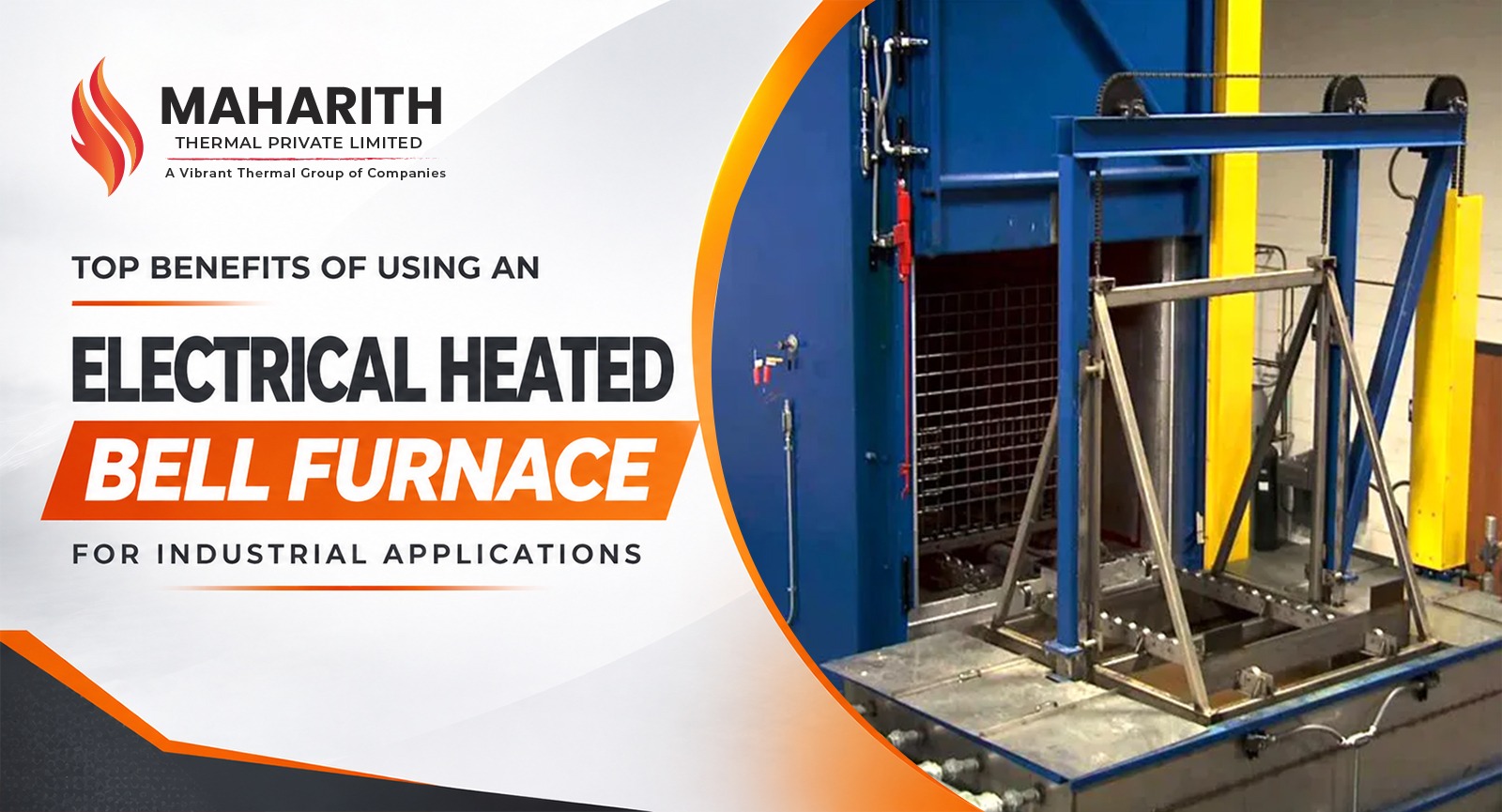
Getting to Know the Electrical Heated Bell Furnace
Heat treatment decides the final strength and finish of many metal products. This blog explains the top benefits of an electric heated bell furnace, where it is used, common problems, care and the points to check before buying one.
A Look at What Follows
The Basic Idea Behind a Bell Furnace
A bell furnace has two main parts, a fixed base and a removable bell. The metal to be treated, such as steel coils, wire or strip, is stacked on the base. Then the bell is lowered over the stack, and the heating starts.
In an electrically heated bell furnace, the heat comes from electric heating elements fitted inside the bell. A fan circulates the atmosphere inside so that the heat reaches all parts of the load evenly.
After the soaking time is over, the load is cooled slowly under the cover, and then the bell is lifted. Many plants use one bell with two or more bases, so while one load cools, the next load is already heating. The bell and base can be designed in different sizes, depending on the weight and diameter of the coils.
Why Electric Heating Makes Sense
These are the top benefits that users of an electric heated bell furnace talk about.
Accurate temperature control. Electric heating can be controlled very closely with thermocouples and PID controllers, so the set temperature is maintained within a narrow band.
Uniform heating. Elements placed around the load and the circulating fan reduce hot and cold spots, which gives uniform properties across the coil or batch.
Clean operation. There is no fuel burning, so no combustion gases, soot or smell near the load. This helps in getting a clean, bright surface on the metal.
Better atmosphere control. With a sealed inner cover, protective gases like nitrogen or hydrogen mixtures can be used, which prevents oxidation and scaling.
Easy automation. Heating cycles can be programmed and repeated, so the results are consistent from batch to batch and depend less on the operator.
Better material properties. Proper annealing improves the ductility and machinability of the metal, so further processing like drawing or rolling becomes easier.
Lower maintenance. There are no burners, fuel lines or flue systems to look after, so the maintenance is simpler.
Safer workplace. Without fuel handling, the risk of fuel leakage and fire is reduced, and the working area stays cooler and cleaner.
Quiet and compact. There are no burners or blowers making noise, and the floor space required is less.
Higher productivity. With multiple bases for one bell, the furnace keeps working without waiting for the cooling of each load.
Industries and Jobs It Handles
An electrically heated bell furnace is used where metal needs controlled heating and cooling.
Steel strip and wire industries use it for annealing coils. Copper and aluminium units use it for softening coils, tubes and sheets. Fastener and spring manufacturers use it for stress relieving and spheroidise annealing.
Tube mills, auto component makers and electrical steel producers also depend on this process, wherever a clean and uniform heat treatment is required. Because the process is clean, the furnace also suits bright annealing of stainless steel and copper products. It is useful for plants that handle many different grades, as the cycle can be changed easily.
Things That Can Go Wrong
Most problems are small and can be avoided with proper operation.
Uneven temperature is the commonest complaint. It usually comes from wrong loading, blocked gaps between coils or a weak circulating fan.
Heating elements can fail due to overheating, contamination or frequent power trips. Thermocouples can also drift with time and show a wrong reading.
A poor seal between the bell and the base lets air enter, which leads to oxidation and discoloured surface.
Overloading the furnace beyond its rated weight is another mistake, as it increases the cycle time and affects the quality.
Voltage fluctuation and weak earthing are other issues, so a stable power supply is necessary. Power cuts during a cycle can also spoil the load, so a backup arrangement or a proper restart procedure should be planned.
Care of the Furnace and Its Parts
Proper care keeps an electric heated bell furnace running for many years.
Check the heating elements and their connections regularly, and replace the damaged ones in time. Keep spare elements and thermocouples in stock to avoid long downtime.
Calibrate the thermocouples and controllers at fixed intervals. Inspect the insulation lining of the bell and repair any cracks.
Check the sealing arrangement, the circulating fan and the gas lines for leakage. Keep the base and the sealing surface clean.
Follow the heating and cooling cycle given by the manufacturer, and keep a record of every batch for future reference. Train the operators for the start-up and shutdown procedure, so that the furnace is handled properly.
Running Cost and Power Needs
An electrically heated bell furnace needs a good power supply, so check the connected load and the supply available in your plant.
The efficiency of electric heating is high at the point of use, because the heat is produced directly inside the bell, with very little loss through a flue. Better insulation lowers the power consumption, and a well-planned loading pattern reduces the cycle time.
For plants having a reasonable power tariff, the running cost can be quite manageable.
Points to Check Before You Buy
While looking for an industrial bell furnace in India, first decide on the material, the size of the load and the heat treatment process you need. Then check the maximum temperature, the power rating and the number of bases required.
Also ask about the atmosphere system, the control and data recording features, the safety interlocks and the quality of insulation.
It helps to approach a reliable manufacturer who can study your process and suggest the right design instead of a standard model. Check the after-sales service and spare parts support as well.
Closing Remarks
An electrically heated bell furnace gives accurate control, clean results and simple operation, which is why it is a preferred choice for annealing and stress relieving in many plants. It also saves manual effort and improves the quality of the final product.
If you are planning to buy one, kindly have a look at the range from Maharith Thermal Pvt. Ltd. at the website. You can check the details, share your requirements and get in touch with the team for proper guidance.
Your Questions, Briefly Answered
What is an Electrical Heated Bell Furnace used for?
It is mainly used for annealing, stress relieving and other heat treatments of coils, wire, strips and tubes.
Why is a protective atmosphere used?
It prevents oxidation and scaling, so the metal comes out with a clean and bright surface.
How is electric heating better than fuel-fired heating?
It prevents oxidation and scaling, so the metal comes out with a clean and bright surface.
How is electric heating better than fuel-fired heating?
It gives better temperature control, no combustion gases and simpler maintenance. However, power cost and availability should be checked.
How often should the thermocouples be calibrated?
As per the schedule suggested by the manufacturer and your quality system, and also whenever the readings look doubtful.