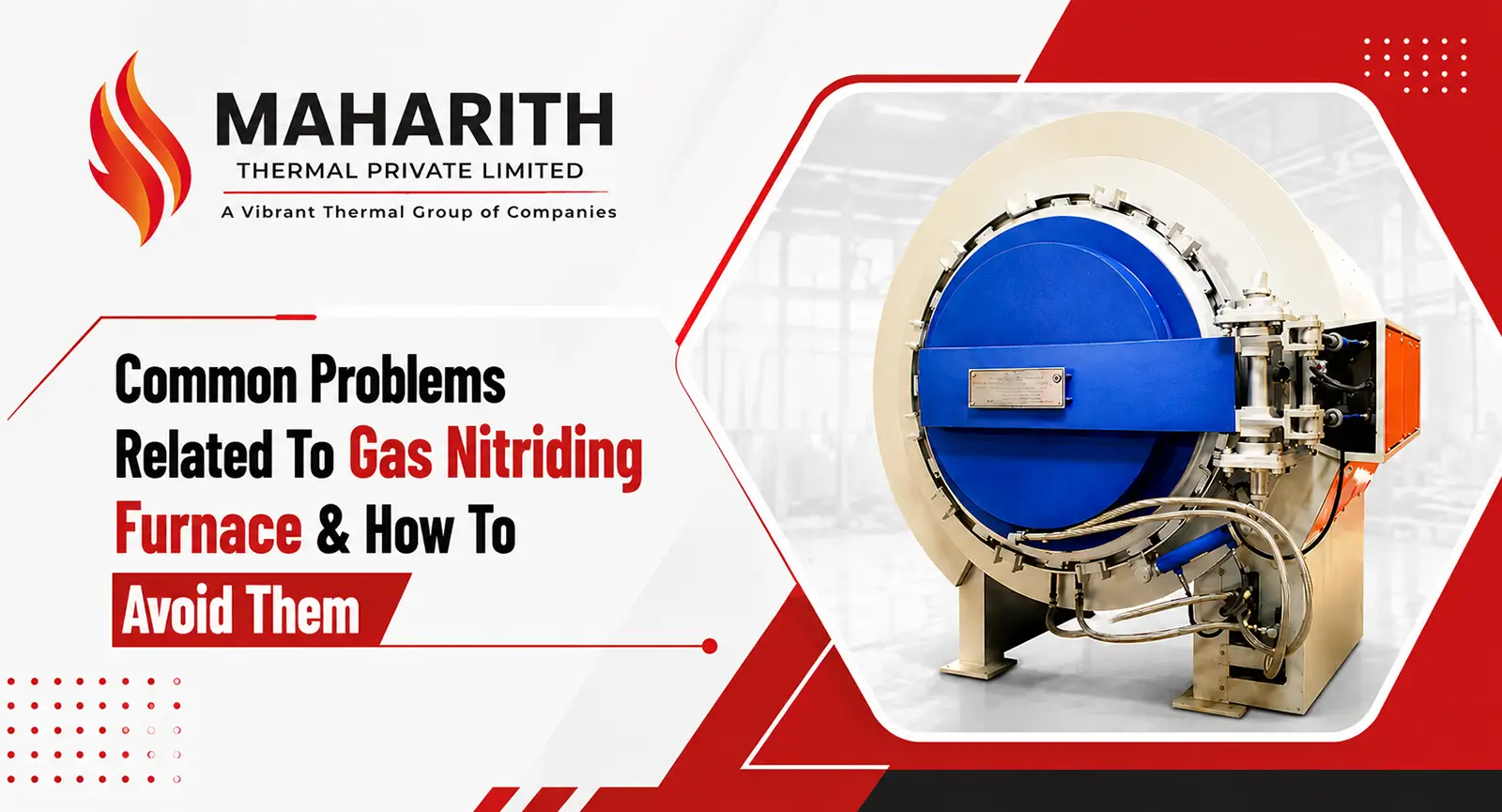
A gas nitriding furnace is a heat‑treatment unit used to increase the surface hardness and wear resistance of steel and alloy parts. It works by letting nitrogen slowly enter the surface of the component at a set temperature and gas atmosphere. If the furnace is not looked after properly, parts can come out soft in some areas, warped, or even with surface damage. This blog will guide you through the issues that are caused and their solutions.
Uneven Case Hardness or Soft Spots
One of the most frequent nitriding problems is uneven case hardness or soft spots on the workpieces. This often occurs when the furnace temperature is not the same everywhere, when the gas flow is blocked or choked, or when parts are loaded too close and shaded from the gas.
To avoid it, keep parts well‑spaced and do not stack or crush them together. Use thermocouples at different zones and corners to check that the temperature is even across the load, and keep the gas nozzles and diffusers clean so nitrogen can reach each part without obstruction.
Excessive Distortion or Warping
Parts that come out bent or twisted after gas nitriding are usually affected by uneven heat distribution, sudden cooling, or high residual stress. Deep case depth applied to thin or sharp‑edged parts tends to worsen the warping.
To reduce this, use simple fixtures or supports to hold parts straight during the cycle. Try to heat up and cool down the furnace slowly as much as the process allows, instead of sudden ramps. Stress‑relief treatment before nitriding can also help parts keep their shape instead of pulling out straight.
Surface Etching or Corrosion
Sometimes parts show etching, rough patches, or corrosion after coming out of the gas nitriding furnace. This can be caused by moisture in the gas, wrong ammonia dissociation, or contamination from dirt or old deposits left in the furnace.
Check the ammonia supply and make sure it is dry and clean. Maintain the ammonia dissociation level as given in your process sheet, and avoid allowing air to leak into the furnace. Simple regular cleaning of the retort and furnace chamber helps remove built‑up deposits that can cause surface problems.
High Ammonia Consumption and Wasted Gas
If your furnace is using too much ammonia, it usually means the gas is being wasted. Leaks in the gas lines, an over‑rich atmosphere, or a poorly sealed furnace can all push consumption up and increase running costs.
Inspect the gas lines, valves, and seals at regular intervals for leaks. Keep the furnace tightly sealed and use simple gas‑saving methods such as stage processing and limiting the gas flow to the minimum level that still gives good results. Watching the ammonia flow and adjusting it carefully can help cut unnecessary consumption.
Burners and Temperature Control Problems
Gas nitriding needs a steady temperature over long periods. If the burners are weak, dirty, or out of tune, the temperature can overshoot, drop, or swing around, giving inconsistent results. Old or damaged thermocouples and faulty controllers can also mislead the operator.
Keep the burners and nozzles clean and take a quick look at the flame to confirm it is even across the furnace. Change any worn‑out thermocouples and get the temperature controller calibrated as per your plant’s routine. A simple, stable heating system gives predictable nitriding results and fewer parts to reject.
Safety Hazards with Gas Leaks
A gas nitriding furnace uses ammonia and sometimes hydrogen, both of which are flammable and hazardous if leaked. Poor ventilation, damaged gas lines, or loose fittings can create unsafe conditions for the shop floor.
Check the gas lines and fittings for leaks when you start or stop the furnace. Use simple ventilation and basic leak‑detection methods in the area. Train the operators on safe handling of gases and emergency stop procedures so they know how to act if something goes wrong.
A Simple Way to Keep Your Gas Nitriding Furnace Running Well
If you want consistent, good‑quality nitrided parts with low rejects and steady running costs, focus on simple, regular checks and correct operating practice. Keep the furnace clean, control the gas flow and temperature properly, and pay attention to how parts are loaded and supported.
For more details on suitable gas nitriding furnace designs, custom solutions, and support, you can visit https://www.maharith.in/ and explore options that match your production volume and the type of parts you treat.
FAQ
What is gas nitriding?
A heat-treat process where nitrogen from ammonia is driven into steel at high temperature to harden the surface and improve wear life.
Why do parts show uneven hardness after nitriding?
Uneven furnace temperature, blocked gas flow, or parts packed too close can stop nitrogen reaching all surfaces, leaving soft spots.
How can I stop parts from warping during nitriding?
Support parts with fixtures, control heat‑up and cool‑down rates, avoid very deep cases on thin pieces, and use stress‑relief when needed.
What causes surface etching or corrosion after nitriding?
Moisture in the gas, incorrect ammonia dissociation, or contamination in the furnace; dry the gas, set dissociation properly, and clean the chamber regularly.
Why is my ammonia use so high and how do I reduce it?
Leaks, an over‑rich atmosphere, or poor sealing wastes ammonia. Check lines and valves, tighten seals, and cut flow to the minimum that still gives the required case.