


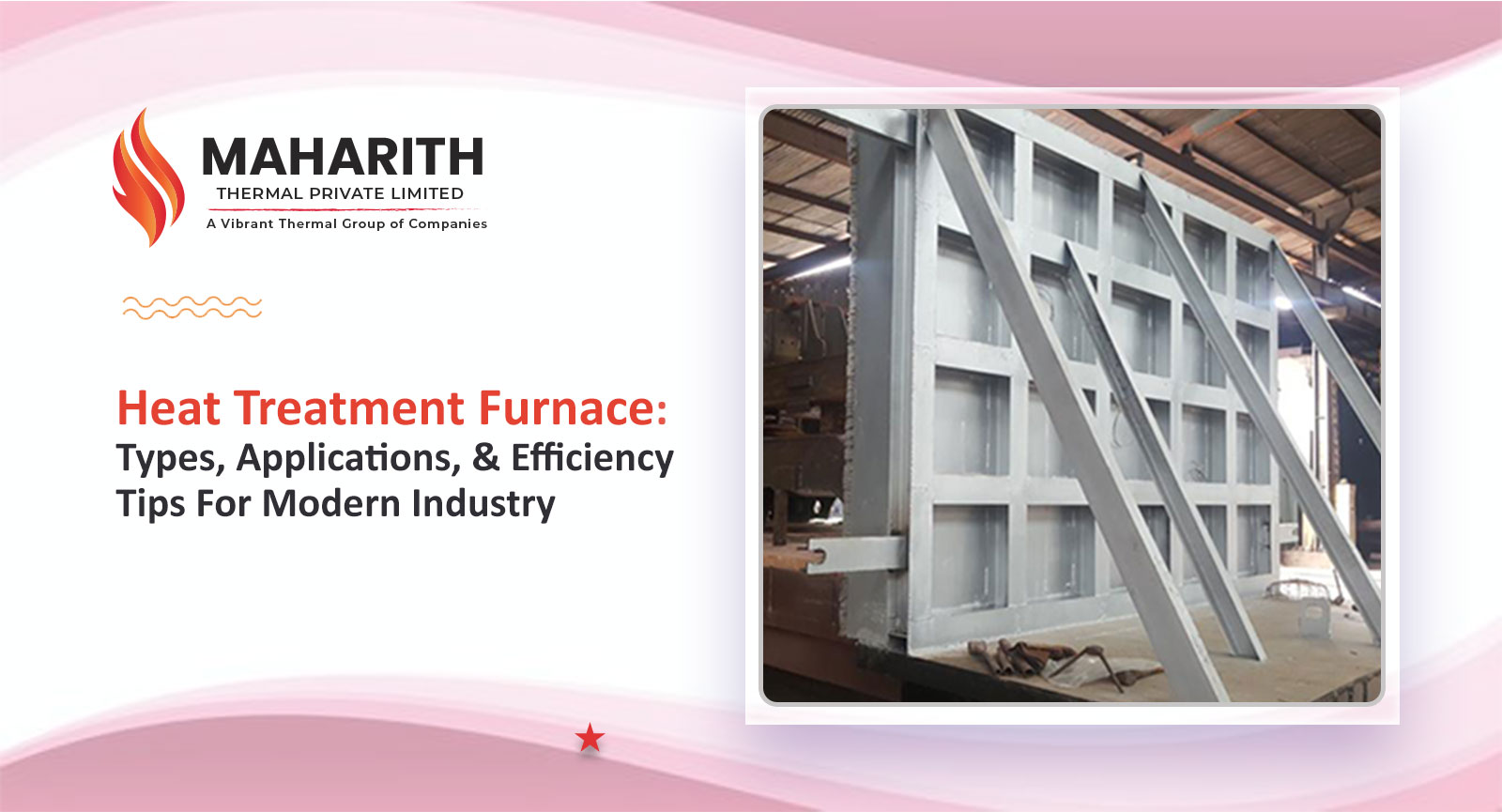
Heat treatment furnace is an important process that is used across different industries to enhance the mechanical properties of metals and alloys. In this process, the heat treatment furnace plays an important role; a controlled heating environment is provided, which helps in modifying the structure of the material. Heat treatment is an important aspect of metal fabrication because, during this process, the metal gains desirable physical and mechanical properties without altering the shape of the product. By understanding the different types of heat treatment furnaces, manufacturers can easily identify the best solution for their production needs and thus improve both efficiency and quality of the product.
Selecting the furnace is all about selecting between types based on operational scale and the level of atmospheric control required. The heating equipment consists of all the major equipment, like resistance furnace, bath furnace, fuel furnace, controlled atmospheric furnace, vacuum furnace, etc., which are all essential equipment in the heat treatment workshop.
Common Types of Heat Treatment Furnaces
1. Salt Bath Furnaces
Also known as a salt pot furnace, these salt bath furnaces use molten salt as a heating medium.
- The Benefit: Rapid and uniform heating because of the direct contact between molten salt and workpiece
- The Drawback: You have to clean the salt off the parts once they are done.
2. Box Furnaces
Widely used for different heating processes. They consist of an insulated chamber to provide controlled heating.
- The Benefit: They are easy to use and can hold parts of almost any shape or size.
- The Drawback: They take a long time to heat up and cool down.
3. Continuous Furnaces
These furnaces use a conveyor belt. Parts move through a heated tunnel at a steady pace.
- The Benefit: Heat treatment furnaces are perfect for high-volume production because they never have to stop.
- The Drawback: They are very large and use a lot of energy.
4. Vacuum Furnaces
These furnaces remove all the air from the chamber before heating the metal.
- The Benefit: Since there is no air, the metal stays perfectly clean and does not rust.
- The Drawback: These machines are expensive to buy and maintain.
5. Induction Furnaces
These use electricity and magnets to create heat directly inside the metal.
- The Benefit: It is the fastest way to heat metal and saves a lot of power.
- The Drawback: They are mostly used for heating the surface of a part rather than the whole thing.
Factors to Consider When Choosing a Furnace
1. Your Workload
- For big or heavy parts: Use a pit heat treatment furnace. These allow you to load specific items and heat them for as long as needed.
- For mass production: Use a Continuous Furnace. These work like a conveyor belt to keep your production line moving without stopping.
2. Heat Consistency
In heat treating, accuracy is everything. You need a furnace that maintains the required temperature. If the heat is uneven, your parts won’t be consistent, which leads to wastage of material.
Conclusion
Heating furnaces are essential in industries that need accurate and stable temperature control for different processing tasks. Knowing their basic working, types, and features helps in choosing the right furnace for specific applications. Different industrial needs are served by both continuous and chamber heat treatment furnaces. If you’re not sure which furnace is right for you, the team at Maharith Thermal Pvt Ltd is here to help.

Maharith Thermal Private Limited
Maharith Thermal Pvt Ltd is known for its expertise in Industrial heater and Industrial Oven manufacturing. We fabricate high-grade and energy-efficient furnaces to meet research and industrial requirements.