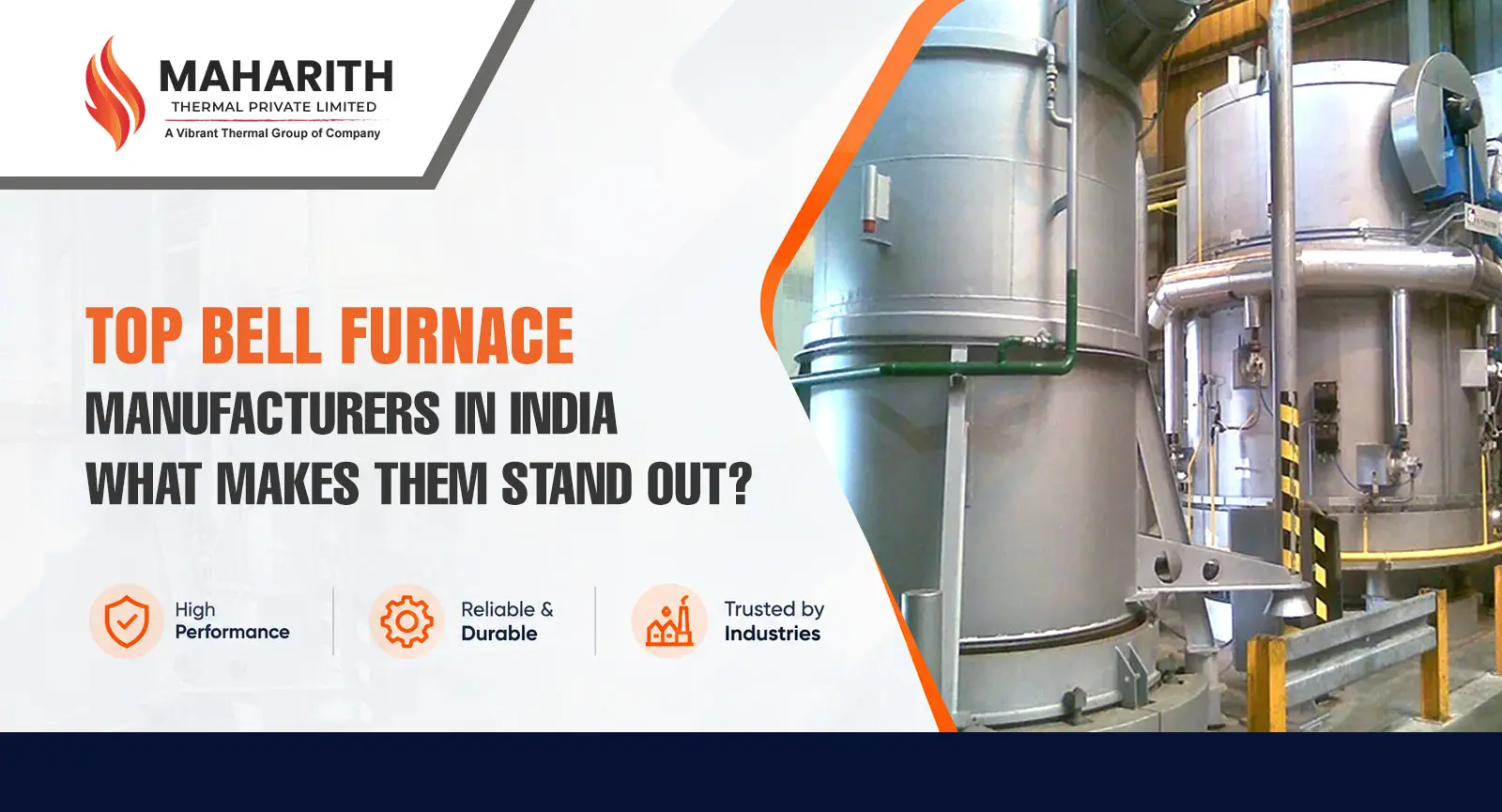
Overview – Not every bell furnace on the market holds temperature evenly, seals its atmosphere properly, or lasts the 10 to 12 years a well-built unit should. The difference between an average manufacturer and a genuinely good one shows up in specific, checkable things, temperature uniformity within a few degrees, gas-tight inner covers, and how long the furnace keeps running without breaking down. This blog goes through what actually separates a strong bell furnace manufacturer from an average one.
This blog covers:
Introduction
A bell furnace is used to anneal steel wire coils, strip coils, and similar products under a controlled atmosphere, and the quality of that furnace directly affects the metallurgical properties of everything that passes through it. A furnace that heats unevenly or leaks its protective atmosphere can turn out a batch with inconsistent hardness or a dull, oxidized surface instead of the bright, uniform finish the process is meant to deliver. Knowing what to check in a manufacturer before buying saves you from these problems later.Temperature Control and Uniformity in a Bell Furnace
Temperature uniformity is one of the clearest signs of a well-built bell furnace, since even a small variation across the workload can mean parts of the same coil come out with different hardness. A good manufacturer builds furnaces that hold temperature uniformity within about ±5°C across the load, verified through proper temperature sensors such as Type K or S thermocouples or infrared pyrometers where needed. Ask any manufacturer directly what uniformity range their furnace achieves and how it is measured, since a vague answer here usually means the actual performance has not been properly tested or documented.Construction Quality and Sealing
The physical build of a bell furnace, particularly the outer heating hood and the inner cover, decides how well it holds atmosphere and how long it lasts under daily use. Double-walled steel construction with proper insulation keeps heat loss down and protects the outer shell from excessive temperature. The inner cover needs to be genuinely gas-tight, since even a small leak lets outside air into the chamber and causes oxidation on the very coils the process is meant to protect. A manufacturer worth choosing will be able to explain exactly how their sealing system works and what steps are taken to prevent leaks developing at the base or cover joints over time.Atmosphere Control Options
A bell furnace needs to work with different protective atmospheres depending on the material and finish required, and the range a manufacturer offers says a lot about their actual experience. Nitrogen is commonly used for general protective annealing, hydrogen gives a bright, oxide-free finish, and a nitrogen-hydrogen mixture is widely used for bright annealing where both surface finish and running cost matter. Argon is used for more specialized, fully inert atmosphere needs. A manufacturer who can explain which atmosphere suits which material and process, rather than offering only one standard option regardless of your requirement, has clearly built furnaces across a wider range of applications.Customization Across Industries
Bell Furnace Manufacturers, who serve a wide range of industries, rather than sticking to just one product line, generally bring more practical experience to a new project. Bell furnaces are used for annealing steel wire coils, cold-rolled strip coils, stainless steel coils, and copper or aluminum coils, and each of these materials has its own temperature, atmosphere, and cooling requirements. A manufacturer with experience across several of these applications is better placed to advise on the right specification for your specific coil size, workload, and production pace, instead of adjusting a single standard design to fit every request that comes in.After-Sales Support and Track Record
A bell furnace is a long-term investment, typically running for 10 to 12 years or more, so support after the sale matters just as much as the build quality at the time of purchase. Ask whether the manufacturer offers installation support, commissioning assistance, and guidance on foundation and utility layout, since getting this wrong at the start causes problems for years afterward. Also check their track record, how long they have been building furnaces, and whether they can share examples of similar projects delivered to other clients. A manufacturer who is upfront about maintenance needs, spare parts availability, and expected service life is generally more reliable than one who avoids these questions.Get a Bell Furnace Built for Your Process from Maharith Thermal
Maharith Thermal Pvt. Ltd., based in Chennai, Tamil Nadu, designs and manufactures custom bell furnace units for annealing steel wire coils, strip coils, stainless steel coils, and copper or aluminum coils, with operating temperatures up to 1,350°C and uniformity within ±5°C. The team offers both electrically heated and gas-fired options, along with complete installation support, including foundation drawings, utility layouts, and commissioning assistance.Frequently Asked Questions
What temperature uniformity should a good bell furnace achieve?
A well-built bell furnace should hold uniformity within about ±5°C across the workload, depending on the zone and process requirements, and this should be measured using calibrated thermocouples or infrared pyrometers rather than just estimated.
Why does the inner cover matter so much in a bell furnace?
The inner cover is what actually seals the protective atmosphere around the workload, and any leak in this cover lets outside air in, which causes oxidation, scaling, or an inconsistent surface finish on the coils being annealed.
Is a gas-fired bell furnace cheaper to run than an electrically heated one?
It depends on local energy costs and availability. Gas-fired furnaces can offer lower running costs where natural gas is cheap and easily available, while electrically heated furnaces generally offer more precise temperature control and lower maintenance since there are no burners involved.
How long does a typical bell furnace last before major parts need replacing?
Most industrial bell furnaces run reliably for 10 to 12 years or more with proper maintenance, though heating elements, thermocouples, and inner cover seals are wear components that typically need periodic replacement well before the furnace itself is retired.